bbdbuy Cycling Jersey Spreadsheet Guide
bbdbuy Cycling Jersey Spreadsheet Guide
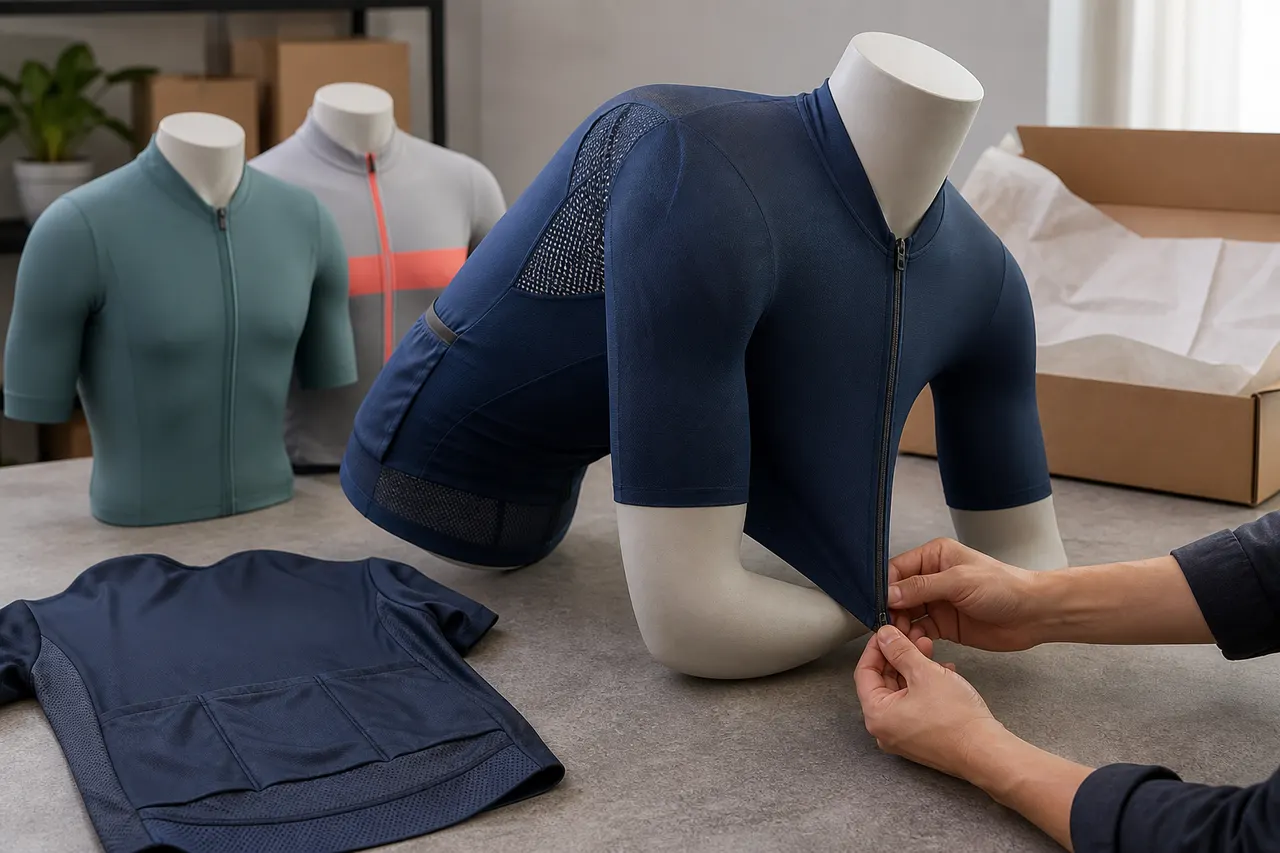
Cycling jerseys can't be filtered solely by color and appearance. The factors that truly affect the user experience are the change in garment length while riding, rear pocket load capacity, zipper operation, cuff stability, and whether the sizing leaves enough room for layering.
This article helps you organize bbdbuy Spreadsheet cycling jersey candidates into a reviewable shortlist and complete pre-order checks. It is not meant to determine whether an item is authentic, nor can it replace the seller's latest size chart, real-time inventory, price, shipping, return conditions, and destination country import regulations.
This article does not have product samples available for item-by-item verification, so it will not provide unverified prices, materials, inventory, or quality rankings. All highly volatile information should be reconfirmed on the day of ordering; this article's method was recorded on August 27, 2026.
First determine riding distance, weather, and carrying requirements
First write down your own usage scenario, then open the spreadsheet to find products. This can help you avoid being misled by color schemes or tight-fitting effects in the images.
Short-distance casual rides typically place more emphasis on freedom of movement, ease of putting on and taking off, and basic storage. Long-distance rides should focus more on rear hem coverage in a forward-leaning riding position, rear pocket stability, moisture-wicking zones, and zipper ventilation. In hot weather, you need to check the location of ventilation areas rather than just seeing the words "quick-dry" and making a judgment. In cool weather or when layering is needed, you should leave room for a snug base layer or a thin vest.
Before ordering, at least clarify the following four points:
How long a single ride lasts, and whether you primarily adopt an upright, slightly forward-leaning, or significantly forward-leaning riding position
Common temperature, humidity, and sun exposure
Whether you need to carry a phone, nutrition, keys, tools, or a thin jacket
Whether it is worn alone or requires adding base layers underneath
If these conditions are not yet clear, don't rush to compare sizes. The same chest allowance can produce completely different results when used in casual riding versus a competitive forward-leaning posture. 🚴
What bbdbuy Spreadsheet can provide
bbdbuy Spreadsheet is better used as a candidate entry and information organization tool, not as final proof of quality. The spreadsheet may help you quickly view names, images, classifications, or product entries, but only when the current product page is accessible and provides a clear name and sufficient information for judgment is that record suitable for the shortlist.
After opening a candidate product page, you should recheck the information currently displayed on the page. Redirected pages, blank pages, expired pages, pages with only category labels and no specific product details cannot be used as valid product evidence.
It is recommended to create the following records for each candidate style:
Check Item | Information to Record | Handling When Unable to Confirm |
|---|---|---|
Product identity | Current name, style or color identifier | Pause comparison to avoid mixing up different versions |
Fit | Tight, regular, or loose, and the basis | Mark for seller confirmation, don't guess from images |
Functional structure | Number of rear pockets, zipper type, hem and cuffs | Only record content supported by both images and text |
Size basis | Size chart units, measurement target, and error notes | Don't apply another product's size chart |
Time-sensitive info | Price, inventory, shipping, and return conditions | Reconfirm on the day of ordering |
Words like "professional," "high-performance," or similar adjectives in product titles do not prove actual structure. Whether a candidate is retained should be determined by visible information, size data, and subsequent QC.
Filter candidates by fit and riding position
The standing appearance of a cycling jersey cannot directly represent the riding effect. When the body leans forward, the front panel tends to bunch up, and the rear hem needs to cover the lower back. Therefore, when filtering, you should check the front length, rear hem length, and shoulder-sleeve direction simultaneously.
Tight fits usually reduce wind flap, but are more sensitive to size discrepancies. Regular fits are more suitable for casual rides and light layering, but excessive looseness may cause the rear pockets to wobble when loaded. Loose styles, if lacking a stable hem, may ride up during cycling; whether it is suitable depends on riding position and usage, not just aesthetics.
You can narrow down the list in the following order:
Remove candidates whose front/rear lengths cannot be confirmed or that have no size basis at all.
Based on the primary riding position, check whether the front panel may bunch and whether the rear hem may expose the lower back.
Based on layering needs, determine whether a tight, moderate, or loose fit is required.
Compare shoulder and sleeve construction, and eliminate styles that significantly restrict forward reach.
Keep two to three candidates with the most complete structural information, pending size and QC review.
Don't treat the fit in model photos as your own wearing result. Unless the page also provides the model's body measurements, size worn, and measurement methods, photos can only be used as appearance reference.
Check fabric labeling, ventilation zones, and cuff structure
If the product page only contains promotional words like "breathable," "cooling," or "quick-dry," without fiber composition, fabric structure, or localized details, you cannot judge its performance in hot weather. Images also cannot prove touch, elastic recovery, or long-term durability.
When checking fabric information, first see whether fiber composition and percentages are clearly stated, then check whether ventilation zones are located in the underarms, back, or side waist. The location of mesh panels should correspond to areas prone to heat buildup, and you should also observe whether they might be too thin or affect pocket load capacity. Such judgments must be based on current page details and subsequent QC.
The cuffs can be checked for the following:
Whether they are plain binding, elastic webbing, or a wider fitting structure
Whether left and right cuffs are symmetrical when laid flat
Whether seams are located where they might rub the arms
Whether sleeve length suits the primary riding position and sun protection needs
Whether the product information provides cuff width, not just a general size
If you are prone to tightness in the arms, don't choose a size based solely on chest circumference. When cuff data is missing, ask the seller for flat-lay width or downgrade the candidate rather than assuming the elasticity will be sufficient. ☀️
Compare rear pockets, zipper, and hem stabilization
The value of rear pockets is not determined solely by quantity. Three shallow pockets may not be more practical than two structurally stable pockets. You need to simultaneously check pocket opening height, bottom position, left-right symmetry, and whether they may sag when loaded with a phone or nutrition.
When planning to carry heavier items, prioritize confirming whether the rear panel fabric and pocket openings have sufficient support. For valuables, consider a zippered pocket, but the page images must clearly show its location and closure method. If the pocket bottom or seams are not visible, do not assume it can safely bear weight.
A full-length zipper allows better ventilation and easy on/off, while a half-zip has a simpler structure but less adjustability. Check whether the zipper pull is easy to operate with one hand, whether there are protective structures at the top and bottom, and whether the pattern and hem on both sides of the zipper align. The appearance of the zipper in images cannot prove smooth operation; such issues should be confirmed through QC details or supplemental seller information.
Common hem stabilization methods include elastic binding and anti-slip zones. Regardless of the structure, check whether it is continuous, symmetrical left to right, and whether the rear hem sufficiently covers the riding position. Buyers with sensitive skin should also consider the risk of irritation from materials in direct contact with skin.
Use the size chart to check chest, length, and layering allowance
First measure a cycling jersey you already own that fits well and is similar in purpose, then compare it with the product's size chart. Directly comparing your body chest measurement to the garment's flat-lay data can confuse measurement targets.
When measuring the reference garment, keep the zipper closed and lay it naturally flat without stretching:
Measure chest width from armpit to armpit; if a chest circumference reference is needed, convert according to the size chart's method
Measure front length from the highest shoulder point or the page-specified starting point
Measure rear length from the same starting point and record the front-rear difference
Measure shoulder width, sleeve length, and cuff width
Record where this reference garment feels tight, suitable, or loose in the actual riding position
Before comparison, confirm whether the units are centimeters or inches, and whether the size chart refers to body measurements or garment measurements. Different sellers, styles, or even batches on the same page may use different rules, so you cannot assume they are the same just because they both label the size as M.
If layering is needed, wear the expected base layer when measuring your body, or directly measure a reference garment that can accommodate that layering combination. Do not mechanically increase one size, because a larger size will also change the length, cuffs, and rear pocket positions.
If the page provides a tolerance, incorporate it into your judgment. If your acceptable range is smaller than the stated manufacturing error, this product is not suitable for ordering based solely on the chart. 📏
QC image and product information verification checklist
The purpose of QC is to check whether the specific item received at the warehouse matches the selected style and visible description, not to prove material performance, durability, or brand authenticity. When image angles, lighting, and resolution are insufficient, clearly record "unable to judge."
Carry out the verification in a fixed order:
Confirm that color, size label, main pattern, and style match the order
Check whether front, back, and left/right sides are fully shown
Compare zipper length, pull, top/bottom ends, and left-right alignment when closed
Check number of rear pockets, positions, opening heights, and left-right symmetry
Examine seams at cuffs, collar, underarms, and hem for obvious skipped stitches, loose threads, or asymmetry
Verify that ventilation zones or mesh areas match the product information
If size is a critical factor, request or confirm flat-lay measurement images with a ruler, and check the ruler's start and end points
If stains, damage, obvious size deviations, or style mismatches are found, handle within the available after-sales window
Do not judge garment length from a single folded image, and do not mistakenly treat perspective distortion in photos as a cutting problem. Size images must clearly show the measurement path and scale, otherwise they cannot support return/exchange decisions.
Organize candidates and complete pre-order review
The final retained candidates do not have to be the most numerous; they should be the styles with the most complete evidence and structures that best match the purpose. You can write a one-line conclusion for each candidate, for example: "Suitable for slight forward lean and short rides, rear pocket structure visible, but cuff width pending confirmation." This note is more helpful for decision-making than "looks good."
Complete the final review before submitting the order:
The product page is still accessible, and the name, style, color, and size selection are consistent.
The size chart belongs to the current product, and units, measurement targets, and tolerances have been confirmed.
Rear pockets, zipper, cuffs, ventilation zones, and hem structure have visible evidence.
Current price, inventory, shipping, route restrictions, tax applicability, and return/exchange windows have been checked on the day of ordering.
For issues that cannot be confirmed via the page, seller supplemental information has been obtained or uncertainty has been proactively accepted.
Time has been reserved at the warehouse stage for checking size and key structures, without missing available processing windows.
This filtering method does not promise a fixed savings amount, because this article does not have verifiable real-time product prices, shipping, and return/exchange cost samples. It may reduce repurchase and return/exchange costs resulting from misjudgments of size standards, pocket types, or zipper structures, but it will increase the time spent organizing information and waiting for supplemental images.
It is suitable for buyers who have clear requirements for riding position, storage, and size, and are willing to verify item by item; it is not suitable for those who just want to order quickly based on appearance, or cannot accept size discrepancies, image limitations, and cross-border after-sales uncertainty. If key dimensions, product identity, or return/exchange conditions are still missing, the safest decision is to delay the purchase rather than filling the evidence gap with promotional words. ✅
agent platform shopping FAQ
1. What steps should I take to evaluate item quality on bbdbuy-spreadsheet.com?
On bbdbuy-spreadsheet.com, to gauge whether a product is of acceptable quality, you should examine the quality control pictures rather than depending only on manufacturer-supplied images, since those are often edited or enhanced. Use those QC images to verify that the product's details match your particular expectations before you finalize a purchase. Additionally, remember that products offered at exceptionally low prices on bbdbuy-spreadsheet.com are frequently not high in quality, so it is wise to be cautious with such listings.
Browse our latest products and find your next favorite item.