bbdbuy Cycling Shoes for Commute or Training
bbdbuy Cycling Shoes for Commute or Training
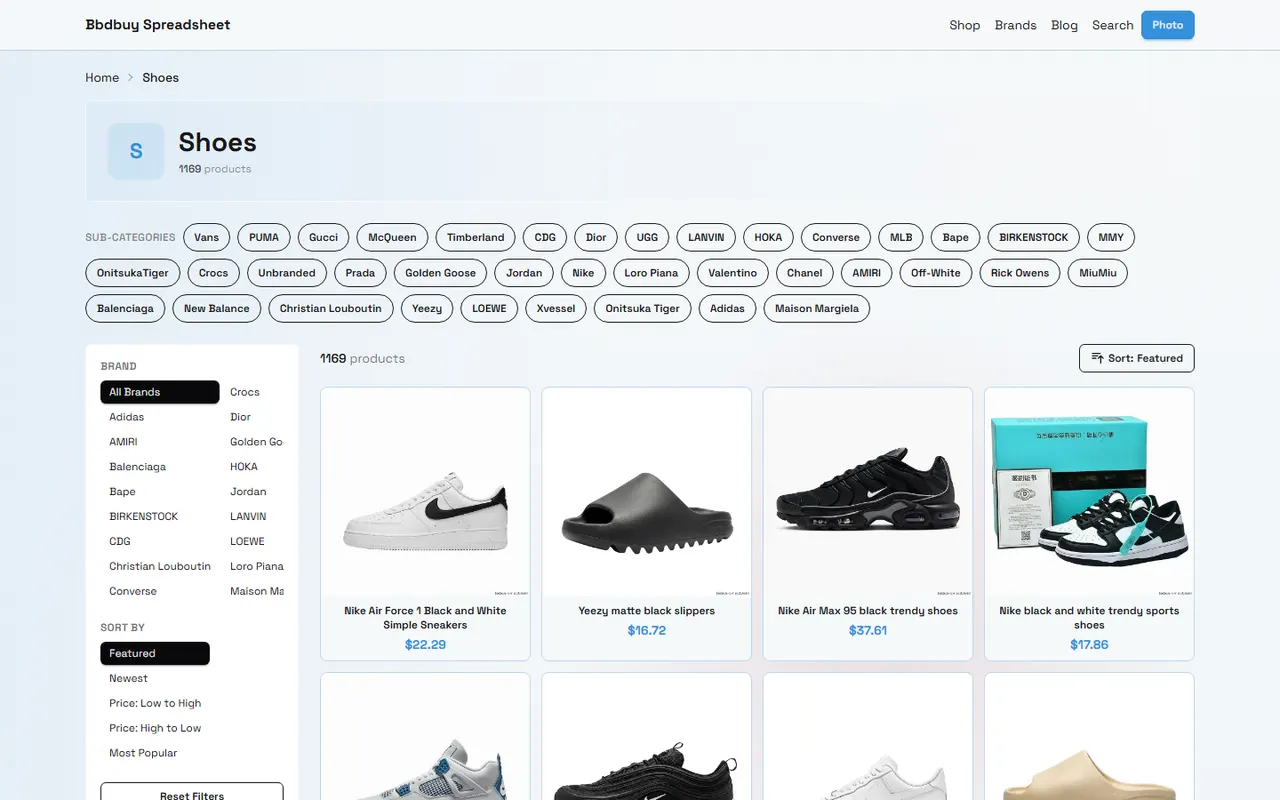
bbdbuy Cycling Shoes for Commute or Training: Choosing by Road Surface, Pedal System, and On/Off Convenience
Cycling shoes are not necessarily better for daily use just because they are stiffer or more professional. Commuters usually have to deal with traffic lights, stairs, subway transfers, and walking in the office; trainers, on the other hand, place more emphasis on pedaling support, pedal compatibility, secure fit, and long-term comfort. Both need to check the outsole structure, sizing, on/off convenience, and actual road conditions, but the order of judgment is not the same.
The question this article aims to solve is: among the product leads on bbdbuy-spreadsheet.com, how to judge whether a pair of cycling shoes is more suitable for commuting, training, or can only be used under specific conditions. After reading, you should be able to complete a pre-purchase review checklist and exclude shoe models that do not match your road surface, pedal system, or daily carrying method.
This article is not a substitute for foot measurement, professional cycling position assessment, or medical advice. Currently, we have not written unverified prices, inventory, materials, reviews, and actual wear performance as established facts. Highly volatile information should be re-confirmed before ordering. The fact boundary verification date for this article is September 21, 2026.
Clarify the Tasks for Commuting and Training
Do not start with appearance or brand name. First, write down the daily tasks this pair of shoes needs to accomplish:
Do you need to walk a long distance off the bike?
Will you enter offices, shopping malls, subway stations, or stairwells?
Will you use a clipless pedal system? If so, which specific cleat standard?
What is the approximate duration and frequency of each ride?
Do you need to put the shoes in a backpack or change quickly at the workplace?
Does the cycling route include wet and slippery surfaces, gravel roads, manhole covers, or frequent stops?
If the main task is urban commuting, ease of on/off, walking stability, and outsole grip are often more important than extreme pedaling efficiency. If the main task is fixed-route training, pedal compatibility, foot retention, and outsole support may have higher priority. If the same pair of shoes must balance both scenarios, you must accept that some indicators will not achieve the highest simultaneously.
🚲 A common misconception is to equate "stiff outsole" directly with "more suitable for training." Outsole stiffness may help transfer pedaling force, but it can also reduce walking comfort. The more commuting demands you have, the more you should include walking and on/off into the main judgment, rather than just looking at the professional appearance.
What Clues the bbdbuy Website Spreadsheet Can Provide
On bbdbuy-spreadsheet.com, the Spreadsheet page can serve as an entry point for filtering and building comparison records. When using it, first confirm whether each candidate entry has enough visible information before deciding whether it can enter the comparison sample.
Priority should be given to recording the following fields:
Product name or model
Page description of upper, outsole, and closure method
Size range and whether the size chart is complete
Whether the pedal or cleat compatibility is clearly stated
Product main image and images that can be used to verify structure
Current price, inventory, and page status
Whether the product page can open normally and display clear content
Verification date of the page information
The appearance of a name in the Spreadsheet does not mean it has been proven suitable for a certain cycling task. If there is only a vague title, a tab page, or an unopenable redirect page, it should not be treated as valid product evidence. If the product page does not state the pedal interface, outsole structure, or size measurement method, it should also be marked as "pending verification" in the comparison table, not filled in by yourself.
Since product prices, inventory, images, and page status may change, you should reopen the corresponding product page before actually ordering to confirm that the information remains consistent. Do not judge current availability based solely on historical screenshots or old records. 🔎
Difference in Choice Between Commuting Road Conditions and Training Environment
Shoe model selection should start from the road surface and stopping method. The following judgments are used to establish priorities and do not imply that any unverified product necessarily has the corresponding performance.
Usage Environment | Priority Checks | Things to Be Wary Of |
|---|---|---|
Short urban commute | Walking stability, grip, quick on/off, upper durability | Overly stiff outsole, clearly protruding cleats, easy to slip when walking |
Long-distance commute | Arch and forefoot space, closure stability, ventilation and protection | Insufficient size information, unadjustable local pressure |
Indoor cycling or fixed-route training | Pedal interface, outsole support, foot retention, ventilation | Page does not clearly state interface or images cannot show structure |
Road training | Cleat position, outsole stiffness, weight, and long-term fit | Over-reliance on marketing words, lack of size and structure information |
Mixed surfaces or short explorations | Grip, dirt resistance, walking ability, closure reliability | Only suitable for flat roads, too little outsole tread pattern |
If you need to get off frequently on your commute, the contact between the outsole and the ground is no longer a secondary issue. Even if the shoes perform well while riding, difficulty walking stably after stopping will affect the overall experience. Conversely, if the shoes are mainly used for indoor training, the weight of walking performance can be appropriately reduced, but the pedal standard and foot retention must be confirmed first.
Do not replace the real scenario with just the words "commuting" or "training." Walking ten minutes every day is completely different from walking occasionally from the bike to the indoor area; a relaxed ride once a week and regular high-intensity training should not use the same set of ranking criteria.
Compare Pedal Structure, Outsole Stiffness, and On/Off Method
First, Confirm Whether the Pedal Structure Matches
Pedal compatibility is a key condition that cannot be inferred from appearance. Before ordering, check:
Does the page clearly state the compatible cleat or pedal system?
Are the mounting holes on the outsole clearly visible?
Do you need to purchase cleats, screws, or installation accessories separately?
Will the cleats affect walking on flat ground?
Are the bike and existing pedals of the same standard?
If the page does not state it clearly, do not treat the name "cycling shoes" as proof of compatibility. For trainers who need clipless pedals, when the interface information is incomplete, the safest conclusion should be "not confirmed yet," rather than guessing based on the outsole shape.
Next, Judge Whether the Outsole Stiffness Matches the Task
Outsole stiffness usually affects pedaling support, flex feel, and walking comfort. If the page only uses adjectives like "high performance," "professional," "power transfer" without structural explanation, the information value is limited.
For commuting, you can focus on whether the outsole has a continuous walking contact surface, obvious anti-slip tread, and a relatively natural flex zone. For training, you should further check whether the outsole provides stable support, whether the cleat area is firm, and whether there is any unadjustable local pressure during long-term use.
Without actual test data, do not rank outsole stiffness, nor claim that a certain model will definitely improve power, speed, or efficiency. You can record the page's explicit description, but you must separate the page description from editorial judgment.
Finally, Compare the On/Off Method
Laces, Velcro straps, dials, or combination closures each have trade-offs:
Laces usually allow fine adjustment, but are slower to operate when stopping or changing shoes.
Velcro straps are suitable for quick on/off, but need to confirm the fit range and long-term retention.
Dial closures are convenient for micro-adjustment, but check whether the dial position is likely to be bumped by pant cuffs or other objects.
Combination closures can balance retention and adjustment, but the more complex the structure, the more you need to confirm accessories and repairability.
Commuters should simulate actual actions: Can it be operated while wearing gloves? Do you need to take off shoes quickly in hallways or stations? Will the laces interfere with the crank, chain, or pedal? Trainers should pay attention to the stability of the closure system during long rides and whether it creates concentrated pressure on the instep. ⚙️
Check Fit by Socks, Pant Cuffs, and Daily Carrying Needs
Sizing cannot just rely on the number of your regular athletic shoes. The forefoot width, upper height, instep pressure, and sock thickness of cycling shoes can all change the actual fit feel.
Before ordering, review in the following order:
Measure the length of both feet and use the larger foot as reference.
Record forefoot width and instep height, especially if your foot shape differs significantly.
Check whether the size chart on the page uses foot length, insole length, or another standard.
Confirm whether the size chart is complete and whether it indicates measurement error or recommended allowance.
Judge based on the actual sock thickness you will use, not barefoot size.
Check whether pant cuffs will get caught on dials, laces, or ankle structures.
If you need to carry the shoes for commuting, confirm whether the shoes are too stiff, bulky, or likely to scratch other items.
If the page does not have a complete size chart, do not treat "true to size" or "buy your usual size" as reliable advice. For people with different left/right foot sizes, wide forefeet, or who need thick socks, lack of measurement information is itself a purchase risk.
Daily carrying also needs separate consideration. Deep outsole tread may pick up mud and water, a hard outsole may damage other items in a backpack, and wet uppers placed in a closed bag may cause odor. Portability is not an appearance issue, but part of the usage frequency.
Build a Comparison List Using Product Information and QC Images
If QC images are provided on the bbdbuy page or in the order process, use them as auxiliary evidence to verify the product status and structure, not as performance tests. Images can help confirm color, appearance, size markings, closure components, and obvious defects, but usually cannot prove outsole stiffness, cycling efficiency, comfort, or long-term durability.
It is recommended to create a brief record for each candidate shoe model:
Product name on the page and verification date
Size range shown on the product page
Pedal interface information explicitly stated on the page
Visible closure method and outsole structure
Appearance facts that can be confirmed from the main image or QC images
Key fields not provided on the page
Aspects that match commuting tasks
Aspects that match training tasks
Questions that still need to be confirmed with the seller or platform before ordering
When viewing QC images, focus on whether the images are clear, whether they correspond to the current product, and whether the outsole and size markings are visible. Do not write visual differences caused by angle, lighting, or compression as conclusions about material, weight, or workmanship, nor write product image observations as feelings after touching or wearing.
If images contain address, phone number, order number, payment information, or other personal information, cover them before saving and sharing. The purpose of showing QC images should be to help verify the product, not to expose order information. 🧾
How to Mark the Boundaries of Judgment When Lacking Test Data
A reliable product review does not need to pretend to have test results that do not exist. When lacking test data, you can divide information into three layers:
The first layer is facts that can be directly verified from the page, such as product name, public size chart, closure form, outsole structure visible in images, and current inventory status shown on the page.
The second layer is conditional judgments based on these facts, such as "If you need to walk every day, an outsole with continuous ground contact may be more worth checking first." Such judgments must use expressions like "may," "should confirm," "depends on," and cannot be upgraded to definite performance conclusions.
The third layer is content that cannot be judged at present, such as actual weight, long-term comfort, wear life, wet grip, stability after cleat installation, and actual power change. Without measurements, trial wear, or verifiable test records, these should be explicitly marked as unknown.
The following content should not be written into product conclusions without evidence:
"Will definitely not cause blisters"
"Suitable for all foot shapes"
"Can significantly improve speed"
"Anti-slip performance verified"
"Stable quality"
"Authenticity guaranteed"
"Absolutely worth buying"
Also, distinguish between page information and platform process information. The product page can prove what the page displayed at that time; it cannot automatically prove how after-sales will be handled, nor can it prove that inventory, price, or shipping conditions will not change later. Before payment, re-check applicable conditions, fees, return/exchange requirements, and address information.
Complete a Shoe Usage Scenario Review Before Ordering
Finally, you can make a decision with a short checklist:
Is my main task commuting, training, or a mix of both?
How far do I need to walk before and after each ride?
Have I confirmed my pedal and cleat standard?
Does the product page provide sufficient size information?
Does the outsole structure match the actual road surface, rather than just marketing words?
Is the on/off method suitable for my parking, shoe-changing, and carrying habits?
Have sock thickness, foot shape, and pant cuffs been included in the judgment?
What can the product images or QC images confirm, and what can they not confirm?
Have the current price, inventory, page status, and related fees been re-checked?
If the size does not fit or the interface does not match, are the after-sales conditions clear?
If more than two items cannot be confirmed, deferring the order is usually safer than guessing based on appearance. Especially pedal interface, size chart, and return/exchange conditions; once these are wrong, it is often difficult to solve simply by adjustment after receiving the shoes.
For commuters, choosing shoes more suitable for walking, grip, and quick on/off may mean giving up some extreme stiffness, but gaining higher daily usage frequency. For trainers, choosing shoes with clear structure, matching pedal standard, and stable retention may mean accepting lower walking convenience. Mixed users should prioritize finding an acceptable balance between the two sets of needs, rather than pursuing the highest in all indicators.
The final judgment should return to the real task: whether the shoes can work normally under your road surface, pedal, socks, pant cuffs, and carrying method. If the product page and QC images cannot support this judgment, keep the unknown items and wait for additional verification, rather than filling in with imagination.
Browse our latest products and find your next favorite item.