bbdbuy Rainy Commute Cycling Checklist
bbdbuy Rainy Commute Cycling Checklist
The challenge of rainy season cycling gear isn't just dumping every item labeled "waterproof" into your cart, but rather building a systematic checklist method based on commute distance, rain intensity, road lighting, and personal items. This article helps commuters who plan to discover Chinese products through the bbdbuy Spreadsheet to organize search terms, check product information, and make ordering decisions based on QC photos and logistics conditions.
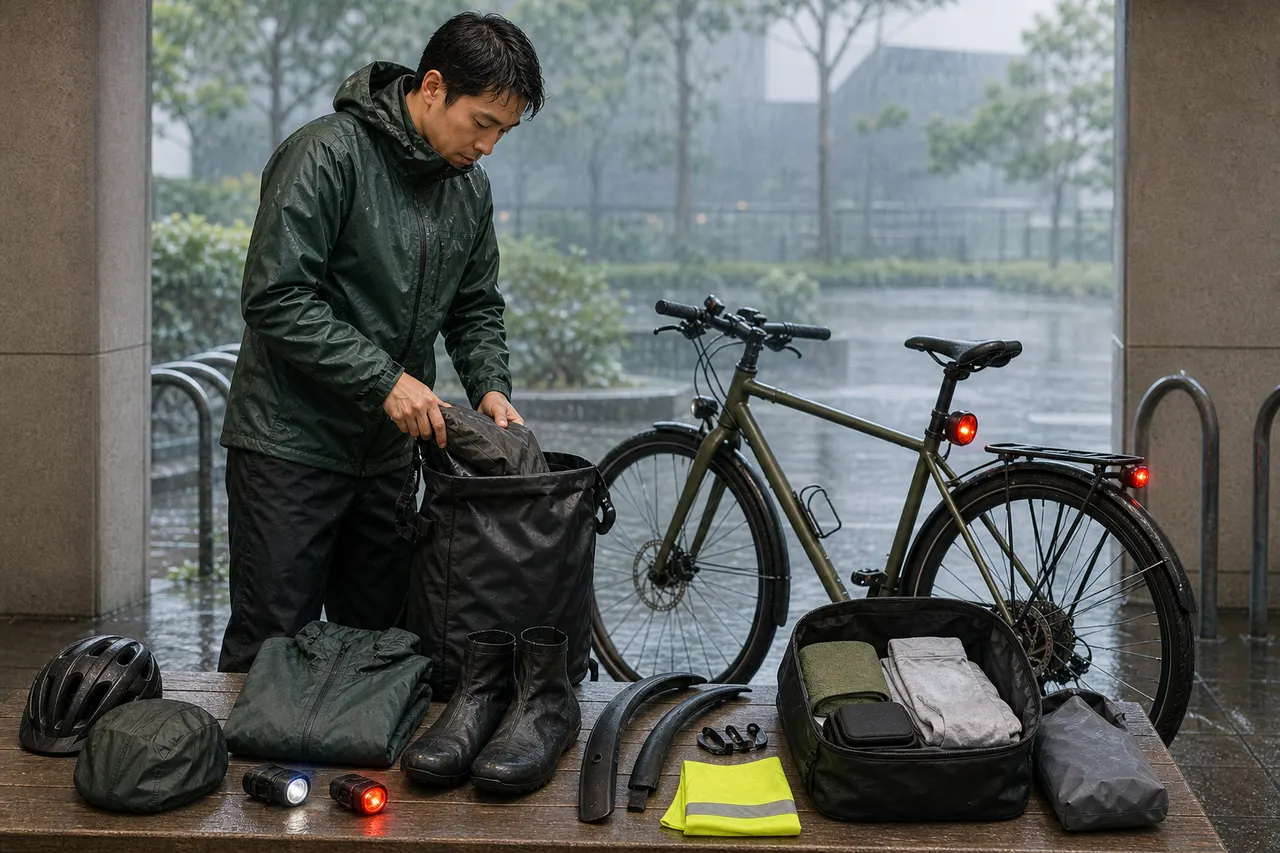
This article does not provide unverified specific products, prices, inventory, or route promises, nor is it suitable for competitive cycling, mountain biking, prolonged heavy rain cycling, or scenarios requiring professionally certified protective equipment. Product pages, shipping fees, taxes, inventory, and return/exchange conditions may change. The verification date for the checklist framework in this article is August 31, 2026; before placing an order, you must still rely on the currently visible page and actual order information.
First define equipment needs based on commute distance and rain conditions
Record your actual commuting conditions before deciding what equipment you need. For short distances, light rain, and with shelters along the way, the focus is usually on quick on/off and waterproofing personal items; for longer distances, sustained rain, or significant road ponding, you should increase requirements for seams, shoe coverage, fenders, and dry/wet separation. ☔
Before ordering, fill in the following information:
One-way distance and typical riding time
Rain type, such as scattered light rain, sustained moderate rain, or with gusts
Proportion of riding time during day, dawn, dusk, or night
Whether using a backpack, basket, rack, or frame bag
Items that need to stay dry, such as computers, documents, clothing, and chargers
Whether there is space to change, dry, and store wet gear upon arrival
Whether the bike already has front/rear lights, fenders, or a rack
This information changes purchasing priorities. For example, waterproof storage for an office computer cannot rely solely on an outer backpack; night routes cannot treat a brightly colored jacket as a substitute for bike lights. 🚲
The role and limits of bbdbuy Spreadsheet in rainy gear discovery
The appropriate use of bbdbuy-spreadsheet.com is to help users discover and organize candidate products, not to replace product page verification, QC inspection, or final order confirmation. Names, category terms, and entry points in the spreadsheet can narrow the search scope, but cannot alone prove that a product is currently purchasable, nor can they prove its size, material, waterproof capability, or accessory completeness.
When using the spreadsheet, each candidate should be further checked against an accessible product page with clear information. If a page redirects, is invalid, has only tags without product details, or lacks visible information sufficient to judge its use, it should not be listed as a valid candidate. For price, inventory, color, size, material, seller, return/exchange conditions, and link status, record the actual verification date; fields that cannot be confirmed should be marked as "Unconfirmed" and not filled in based on the title.
A practical candidate record should at least include:
Product name and its actual use
Whether the page is accessible
Available sizes, colors, and specifications
Materials and structure explicitly stated on the page
Whether product body and packaging information are listed separately
Areas that still need confirmation through QC photos
Verification date of current price, inventory, and return/exchange conditions
Build search terms from rain outerwear, shoe coverage, and fender needs
When searching, focus on structure and usage scenarios rather than just typing "rainy cycling gear". You can start by dividing into three directions: rain outerwear, lower body and shoe coverage, and bicycle fenders, then eliminate mismatched products based on visible page information.
For rain outerwear, you can combine terms like "cycling rain jacket", "waterproof shell", "hood compatible helmet", "sealed seam". Note that descriptions like waterproof, water-resistant, or similar in product titles do not replace structural evidence. You should further check whether the page clearly states seam treatment, front placket closure, cuff adjustment, hem coverage, and ventilation methods. Without clear information, mark as pending verification.
For shoe needs, use terms like "cycling shoe cover", "rain overshoe", "waterproof gaiter", and check opening direction, fastening method, sole exposed area, and size correspondence. Whether shoe covers are suitable for commuting shoes, clipless shoes, or thick-soled shoes cannot be inferred from appearance alone.
For fender needs, combine vehicle structure searches with terms like "bicycle fender", "mudguard set", "quick release mudguard". Focus on wheel diameter, tire width, mounting holes, frame clearance, and fixing accessories. Fenders primarily reduce tire spray and mud, and should not be considered a full-body rain solution.
Filter visibility-related structures for low-light conditions
Rainy days often bring darkened skies, foggy car windows, and reflective road surfaces, so visibility screening must consider both active lighting and passive reflection. 🔦
Front and rear lights should have brightness modes, mounting position, fixing method, battery life information, protection rating, and charging interface individually checked based on actual route and local requirements. This article does not set a uniform brightness or battery life threshold because road lighting, riding speed, and regulatory requirements vary. When necessary parameters are missing from the product page, do not judge solely based on words like "high brightness" or "night riding".
Reflective outerwear, backpack covers, or straps are passive visibility structures. When checking, pay attention to:
Whether reflective areas are visible from front, sides, and rear
Whether back reflective areas are completely blocked when wearing a backpack
Whether reflective parts are sewn, heat-pressed, or simply glued
Whether reflective structures easily fold or get covered by clothing when moving
Whether the product provides clear images under normal and low-light conditions
Bright colors and reflective materials can increase the chance of being seen, but cannot replace compliant bike lights, braking control, and safe riding judgment.
Compare waterproofing and dry/wet separation for personal items
Personal items should be divided into at least three categories: must stay dry, can tolerate brief moisture, and will remain wet after arrival. Computers, documents, medicines, and chargers should not be mixed directly with wet raincoats, shoe covers, or gloves.
You can combine storage as follows:
Main bag handles fixation and load-bearing, inner waterproof bag protects items that cannot get wet
Wet gear uses separate bag, with steps for removal and drying after arrival
Frequently used keys, access cards, and phones placed in easily operable but reliably sealable positions
Water bottles with liquids stored separately from electronic devices
If using a backpack rain cover, continue to check whether backpack openings, shoulder strap connection points, and back-contact side may still let water in
Roll-top bags, zipper bags, and rain covers have different usage logic. Roll-top structures need sufficient folding margin; zipper solutions require checking the zipper and its covering structure; rain covers must have fixing cords or buckles that fit the bag body. None of these solutions should be inferred as immersion protection based solely on a "waterproof" label.
Use QC photos to check seams, closures, and fixing components
The purpose of QC photos is to verify that the specific product received at the warehouse matches the candidate page and to identify obvious size, color, quantity, or assembly issues. It cannot prove long-term waterproof performance, nor replace material certification or actual environmental testing.
When requesting or viewing QC photos, prioritize details that affect use:
Jacket front, back, cuffs, hem, and hood connection points
Whether the inside of seams shows claimed taped or sealed structures
Whether zippers, plackets, roll-top closures, and pocket openings close completely
Shoe cover bottom opening, Velcro, zippers, and securing straps
Fender brackets, screws, buckles, and accessory counts in packaging
Position and completeness of reflective areas under normal lighting
Bag shoulder straps, attachment points, buckles, and frame straps
Size labels, with ruler checks for critical lengths or widths
If missing parts, obvious damage, color or size mismatches are found, raise the issue within the warehouse's processing period. Do not guess seam workmanship from blurry photos; request closer, better-angled supplementary photos for areas that need clarity.
Double-check package volume, logistics information, and return/exchange boundaries
Soft items like raincoats and shoe covers may compress easily, but fenders, light mounts, and bags with hard shell structures may change package volume. 📦 Whether combining packages saves money must be calculated based on actual weight, package dimensions, available routes, and billing rules of candidate products; do not assume more items always means cheaper.
During the review, record:
Whether actual weight and package dimensions have been generated
Whether the logistics route uses actual weight or volumetric weight, and the calculation method
Whether fenders, lights, or hard buckles are prone to compression during transit
Whether battery-containing items are restricted by the route
Whether combined packaging requires extra cushioning, waterproof bags, or reinforcement
Possible destination country taxes, declaration documents, and import restrictions
Return/exchange conditions on product page and warehouse processing period
Whether returns or remedies are still feasible after international shipment
Declarations should match actual products and order information. Do not reduce taxes through under-declaration, false category reporting, or other means of evading inspection. If route compatibility, taxes, or return/exchange boundaries of an item cannot be confirmed, pause submitting the international parcel.
Generate pre-order checklist for rainy season commuting
Before final ordering, put each candidate product into the same checklist. Only when key fields reach "Confirmed" should the product proceed to payment or warehouse processing. ✅
Check Item | Evidence Required for Confirmation | Action if Unconfirmed |
|---|---|---|
Usage Scenario | Commute distance, rain, and installation conditions match | Change search terms or remove candidate |
Product Validity | Page accessible and name, specifications clear | Do not treat as valid product page |
Rainproof Structure | Page info and QC details correspond | Request supplementary photos, do not infer performance |
Visibility Structure | Reflective position or light parameters suitable for route | Add independent lighting solution |
Dry/Wet Separation | Dry items and wet gear can be stored separately | Add inner bag or wet bag |
Size and Accessories | Size, measurements, buckles, and mounting parts complete | Apply for processing within deadline |
Shipping Conditions | Weight, volume, route, and battery restrictions clear | Pause submitting parcel |
Taxes and Declaration | Destination rules and true declaration info clear | Check official requirements before proceeding |
Return/Exchange Boundaries | Product page conditions and warehouse deadline recorded | Do not purchase high-uncertainty items |
The savings from this plan mainly come from reducing repeat purchases, mismatched mounting parts, and unnecessary international shipping, rather than an unverifiable fixed amount. Increased costs and risks include extra QC photos, additional inner bags or packaging, higher volumetric weight, and larger parcel value with greater single-loss exposure after combining packages.
It is more suitable for daily commuters willing to check pages, QC, and logistics conditions item by item; it is not recommended for those with time constraints, inability to confirm vehicle dimensions, need for professional protective certification, or planning to ride in extreme weather to directly purchase from the list. The ultimate goal is not to buy the most, but to ensure each piece of equipment addresses a defined rainy-day problem and leaves verifiable evidence before payment.
Browse our latest products and find your next favorite item.